
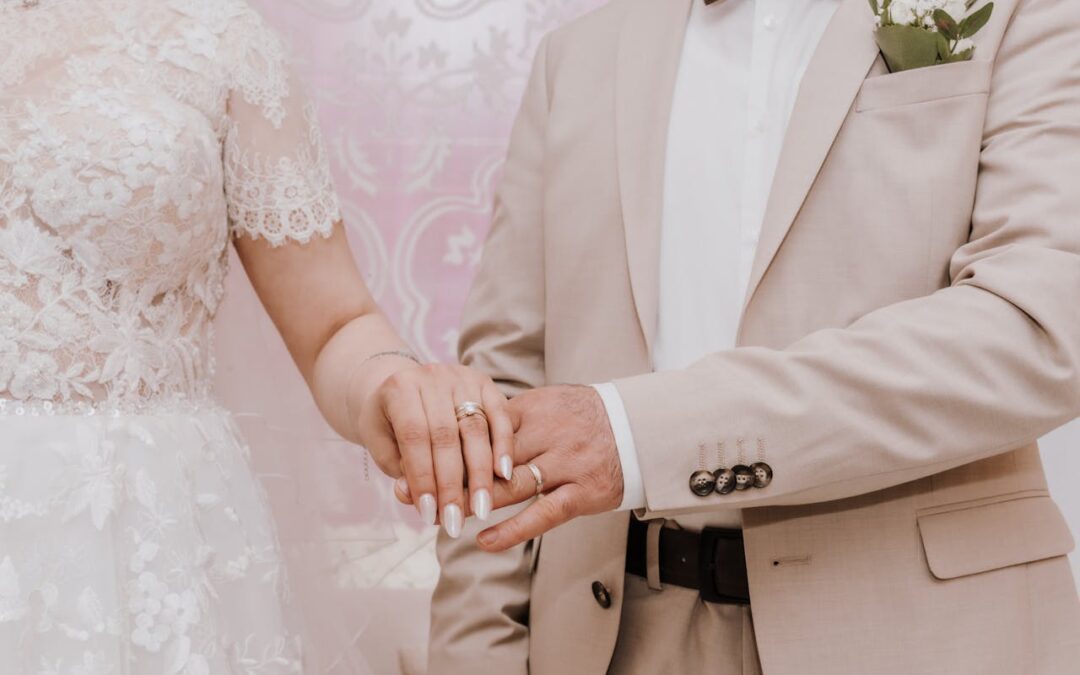
You’re ready to marry the person you love, but a traditional wedding doesn’t fit your situation. Maybe you live in different states or countries. Perhaps you’re on a tight budget. Or you simply prefer the convenience of a ceremony from your living room.
Getting married online is now a legitimate, legal option for couples across America and around the world. Virtual weddings aren’t just emergency substitutes for traditional ceremonies—they’re real marriages recognized by every state and the federal government.
This guide walks you through everything you need to know about getting married online. You’ll discover exactly how virtual weddings work, what makes them legal, and how to plan your own online ceremony from start to finish.
What Does Getting Married Online Actually Mean?
Getting married online means holding your wedding ceremony through a video platform like Zoom, Skype, or Google Meet. You and your partner connect digitally with an authorized officiant who performs your legal marriage ceremony.
The ceremony includes the same legal requirements as traditional weddings. You exchange vows, make declarations of intent, and have witnesses present. The main difference is that everyone participates through screens instead of gathering in one physical location.
Your online marriage produces a real marriage certificate. This certificate carries the same legal weight as any other marriage certificate. You can file joint taxes, change your name, access spousal benefits, and exercise all rights that married couples enjoy.
Many people confuse online weddings with “commitment ceremonies” that aren’t legally binding. Getting married online is completely different. When done through proper channels, your virtual wedding creates a genuine legal marriage.
The process works through states that have authorized virtual marriage ceremonies. These states issue marriage licenses that allow remote weddings. Your officiant must be authorized in one of these states, and your ceremony must follow that state’s legal requirements.
Why Choose Getting Married Online Over Traditional Ceremonies?
Cost savings attract many couples to online weddings. Traditional weddings in America cost an average of $30,000 or more. Getting married online typically costs between $100 and $500 for the entire process.
You skip venue rentals, catering costs, photographer packages, and all the other expenses that make traditional weddings so pricey. You can spend that money on a house, honeymoon, or investments instead.
Convenience matters when you and your partner live far apart. Military couples separated by deployment can marry without waiting months for leave. International couples avoid expensive flights. Long-distance relationships become marriages without anyone needing to travel.
Time constraints make traditional weddings difficult for some couples. Planning a full wedding takes months or even years. Getting married online can happen in as little as a few days from decision to ceremony.
Privacy appeals to couples who prefer intimate ceremonies. You control exactly who attends your virtual wedding. No awkward family politics about guest lists. No pressure to invite people you barely know.
Health considerations make online weddings practical. Immunocompromised individuals can marry safely. Elderly relatives can attend without travel risks. Anxiety about crowds or social situations becomes a non-issue.
Step 1: Research Which States Allow Getting Married Online
Only certain states currently authorize virtual marriage ceremonies. Utah offers the most accessible program for getting married online. Utah County lets couples from anywhere in the world obtain marriage licenses and hold ceremonies completely remotely.
California provides online marriage options through specific counties. Los Angeles, San Diego, Santa Clara, and several other counties offer virtual services. You must be physically located in California during your ceremony.
Colorado allows self-solemnizing marriages where you marry yourselves without needing an officiant. This makes getting married online simple since you don’t need to find an authorized officiant. Both partners must be together in the same location.
Arizona offers limited virtual wedding services through Pima County. You need to visit the courthouse in person to get your license, then you can have a virtual ceremony with a judge.
Illinois permits online marriages through Cook County only. You must be in Cook County during your ceremony. The county clerk handles marriage licenses through a virtual appointment system.
Each state has different residency requirements, waiting periods, and procedural rules. Research the specific requirements for any state you’re considering. Don’t assume rules are the same across different states.
Step 2: Decide Between DIY and Using a Marriage Service
You can handle getting married online yourself or hire a company that specializes in virtual weddings. Both approaches work, but they suit different couples.
The DIY approach saves money but requires more work. You apply for the marriage license yourself, find your own authorized officiant, arrange your own witnesses, and handle all paperwork filing. This works well if you’re organized and comfortable managing bureaucratic processes.
Virtual marriage services handle everything for you. They apply for your license, provide an authorized officiant, arrange witnesses if needed, conduct your ceremony, and file all paperwork. You pay for convenience and peace of mind.
Typical online marriage services charge between $200 and $600 for complete packages. This includes all government fees, officiant services, and administrative work. Some companies offer payment plans if you need them.
High-end services add extras like professional ceremony design, custom vows, virtual receptions with guests, and premium certificate packages. These luxury options can cost $1,000 or more.
Compare several services before choosing one. Read reviews from actual customers. Verify the company works with properly authorized officiants in states that legally permit getting married online. Watch out for companies making promises that sound too good to be true.
Step 3: Gather Required Documents and Information
You’ll need valid identification to apply for your marriage license. A driver’s license or passport works in most cases. State-issued ID cards are usually acceptable too. Make sure your ID isn’t expired.
Provide accurate personal information during your application. You’ll give your full legal name, current address, birth date, birthplace, and Social Security number. Your partner provides the same information.
If either of you was married before, you need documentation showing that marriage ended. Bring a divorce decree if you’re divorced. Bring a death certificate if you’re widowed. These documents prove you’re legally free to remarry.
Some states ask for parents’ names and birthplaces. Have this information ready even though it seems outdated. Government forms often require details that feel unnecessary.
You might need proof of age if you look young. Some states require parental consent for anyone under 18. A few states won’t issue marriage licenses to anyone under 18 regardless of consent.
Check whether your chosen state requires witnesses and how many. Most states need at least one witness, many require two. Your witnesses need to be adults with valid identification.
Step 4: Apply for Your Marriage License
Start your marriage license application through the proper channel for your chosen state. Utah handles everything online through the county website. Other states might require phone calls or video appointments.
Complete the application form carefully. Double-check all information before submitting. Mistakes can delay processing or cause your license to be rejected. Names must match exactly what appears on your identification documents.
Pay the license fee using the accepted payment method. Most states accept credit cards for online applications. Fees typically range from $30 to $100 depending on the state and county.
Wait for approval and license issuance. Processing times vary by state. Some states issue licenses immediately after application approval. Others mail licenses to you, which takes several days.
Note your license expiration date. Most marriage licenses remain valid for 30 to 90 days after issuance. You must hold your ceremony before expiration or apply for a new license.
Some states impose waiting periods between applying and receiving your license. You might wait 24 hours to 5 days. Other states issue licenses right away. Check your state’s waiting period when planning your timeline.
Step 5: Find an Authorized Officiant for Your Virtual Ceremony
Your officiant must be legally authorized to perform marriages in the state where you’re getting your license. This is the most important legal requirement for getting married online.
If you’re using Utah, your officiant must be physically located in Utah during the ceremony. You and your partner can be anywhere, but the officiant needs Utah authorization.
Many online marriage services provide officiants as part of their packages. This removes the stress of finding someone yourself. The company guarantees their officiant is properly authorized.
If you’re finding your own officiant, verify their credentials carefully. Ask for proof of their authorization. Request their registration number or ordination certificate. A legitimate officiant will gladly provide documentation.
Friends or family members can become officiants through online ordination. Organizations like Universal Life Church and American Marriage Ministries ordain people quickly. Check that your state accepts online ordinations before relying on this option.
Schedule your ceremony date with your officiant once you have your marriage license. Coordinate a time that works for everyone including your witnesses. Make sure the date falls within your license’s validity period.
Step 6: Plan Your Virtual Ceremony Details
Choose your video conferencing platform for getting married online. Zoom is the most common choice because it’s reliable and easy to use. Google Meet, Skype, and Microsoft Teams work too.
Test your technology several days before the ceremony. Check your internet connection speed. Verify your camera and microphone work properly. Make sure you know how to share the video link with participants.
Decide who you want to attend your virtual wedding. You can keep it just you, your partner, the officiant, and required witnesses. Or you can invite dozens of family members and friends to watch.
Send calendar invitations with the video link to everyone attending. Include the date, time, and time zone clearly. Remind people to test their technology before the ceremony.
Plan what you’ll wear for your ceremony. You can dress formally in wedding attire or casually in comfortable clothes. Some couples wear matching outfits. Others prioritize comfort over tradition.
Write your vows if you want personal ones. You can use traditional vows or express your own feelings. Your officiant needs you to include the legal declaration of intent regardless of which vows you choose.
Set up your ceremony space. Choose a location with good lighting and a clean background. Remove clutter from view. Consider adding decorations like flowers or candles to make the space feel special.
Step 7: Hold Your Legal Wedding Ceremony
Join the video call at the scheduled time. Log in a few minutes early to handle any technical issues before the ceremony starts. Your officiant and witnesses should join early too.
The officiant begins the ceremony and guides you through each step. They’ll welcome everyone, make opening remarks, and explain what will happen during the ceremony.
Exchange your vows when prompted. Look at each other through the camera. Speak clearly so everyone can hear your promises. Let yourself feel the emotions of this moment.
Make your declaration of intent. The officiant asks each of you whether you take the other person as your spouse. You answer “I do” or “I will.” This statement is legally required for getting married online.
Your officiant pronounces you married after you complete your vows and declarations. They’ll say something like “By the power vested in me by the state of [state name], I now pronounce you married.”
Witnesses observe the entire ceremony. They verify that both of you consented freely to the marriage. Their signatures on your marriage license confirm the ceremony happened.
Celebrate your new marriage with your virtual guests. Some couples share a kiss, pop champagne, or cut a cake on camera. Others simply thank everyone for attending.
Step 8: Complete and File All Required Paperwork
Sign your marriage license immediately after the ceremony ends. Use your current legal name, not a name you plan to adopt after marriage. Your signature must match your identification documents.
Your officiant completes their portion of the license. They record the ceremony date, time, and location. They sign and date the document, adding their title and authorization information.
Witnesses sign the license in their designated areas. They confirm they watched the ceremony and that both parties consented. Their signatures verify the marriage’s validity.
Your officiant files the completed license with the appropriate county clerk. Most officiants handle this automatically as part of their service. Filing must happen within a specific timeframe, usually 3 to 10 days after the ceremony.
Verify that your officiant will file the paperwork. Get their contact information and follow up to confirm filing is complete. This is too important to leave to chance.
Wait for your official marriage certificate to arrive. The county clerk processes your filed license and creates your legal marriage certificate. Processing typically takes 2 to 8 weeks.
Order several certified copies of your marriage certificate. You’ll need these for changing your name, updating benefits, filing taxes, and other legal purposes. Order them directly from the county clerk.
Making Your Online Marriage Certificate Work for You
Your marriage certificate from getting married online proves you’re legally married. You use it the same way couples use certificates from traditional weddings.
Change your name with Social Security first if you’re changing it. Visit a Social Security office or mail your application with a certified copy of your marriage certificate. Name changes through Social Security are free.
Update your driver’s license and passport next. Both require certified copies of your marriage certificate. Your driver’s license agency and passport office each keep the copies you submit.
Add your spouse to insurance policies. Health insurance, car insurance, and life insurance all need updates after marriage. Contact your insurance providers with your marriage certificate information.
Update beneficiaries on financial accounts. Review retirement accounts, investment accounts, and bank accounts. Marriage changes default beneficiary rules in many cases.
File your taxes correctly. You’ll file as “married filing jointly” or “married filing separately” on your next tax return. Most couples save money by filing jointly.
Your employer needs to know about your marriage. Update your W-4 tax withholding form. Add your spouse to health insurance during open enrollment or as a qualifying life event.
Legal Validity of Getting Married Online
Your online marriage is legally valid in 3 states. Constitutional law requires every state to recognize valid marriages from other states. This is called “full faith and credit.”
A marriage certificate from Utah works in Florida, Texas, New York, and everywhere else. No state can refuse to recognize your marriage just because the ceremony happened online.
Federal agencies accept online marriages for all purposes. You can file joint tax returns. You can sponsor your spouse for immigration. You qualify for Social Security spousal benefits. Getting married online creates a real marriage under federal law.
Most foreign countries recognize U.S. marriages regardless of how the ceremony happened. Your marriage certificate works for immigration applications, work permits, and other international purposes.
Some countries might require additional documentation. An apostille stamp authenticates your marriage certificate for international use. Your county clerk can provide apostille services for a small fee.
Employers and insurance companies can’t discriminate against online marriages. Your benefits, leave policies, and other employment matters treat online marriages exactly like traditional ones.
Common Questions About Getting Married Online
People often ask whether online marriages are “real” marriages. Yes, absolutely. Getting married online creates the same legal relationship as traditional weddings. Your marriage certificate proves it.
Some worry other people won’t respect their online marriage. This concern is understandable but rarely plays out in reality. Most friends and family care that you’re married, not how the ceremony happened.
Cost concerns stop some couples from considering online weddings. But getting married online typically costs less than $500 total, compared to $30,000 for traditional weddings. The savings are real.
Technical difficulties worry people who aren’t comfortable with technology. Video calls have become so common that most people can handle them easily now. Services that help with getting married online provide technical support too.
Questions about religious validity come up for faith-focused couples. You can have a religious blessing ceremony separately from your legal online marriage. Many couples do both.
You may also read: U.S. States Allowing Online Marriage: 4 Proven Options Explained
Mistakes to Avoid When Getting Married Online
Don’t skip researching state requirements. Different states have different rules about getting married online. What works in Utah won’t work in California. Know your chosen state’s specific requirements.
Don’t forget about license expiration dates. Marriage licenses expire after 30 to 90 days. Missing this deadline means starting over with a new application and fee.
Don’t use an unauthorized officiant. Verify your officiant’s credentials carefully. An unauthorized officiant means your marriage isn’t legally valid, even after a beautiful ceremony.
Don’t forget to arrange witnesses ahead of time. Having witnesses no-show can derail your entire ceremony. Confirm their attendance multiple times.
Don’t leave paperwork filing to chance. Verify your officiant will file the completed license promptly. Get confirmation that filing happened successfully.
Don’t assume you can use any video platform. Some states specify which platforms are acceptable. Check requirements before scheduling your ceremony.
Don’t forget to order multiple certified copies of your marriage certificate. You’ll need them for many purposes. Order several copies right away rather than requesting them individually later.
Your Journey From Single to Married Online
Getting married online transforms your relationship status from single to married quickly and affordably. The process is straightforward: research states, apply for a license, find an officiant, hold your ceremony, and file paperwork.
Thousands of couples have already chosen online weddings. Some married during pandemic restrictions. Others prefer the simplicity and cost savings. Many face circumstances that make traditional weddings impractical.
Your reasons for getting married online are your own. What matters is that you want to marry your partner and make that commitment legal and official.
Start today by choosing which state you’ll use for your marriage license. Research that state’s requirements. Gather your documents. Begin your application.
Your legally recognized marriage is closer than you might think. Getting married online removes barriers that stop some couples from marrying. Distance, budget, time, privacy, health—whatever your reason, virtual weddings provide a real solution.
Take the first step now. Your marriage awaits, and your love deserves legal recognition regardless of how you choose to celebrate it.