
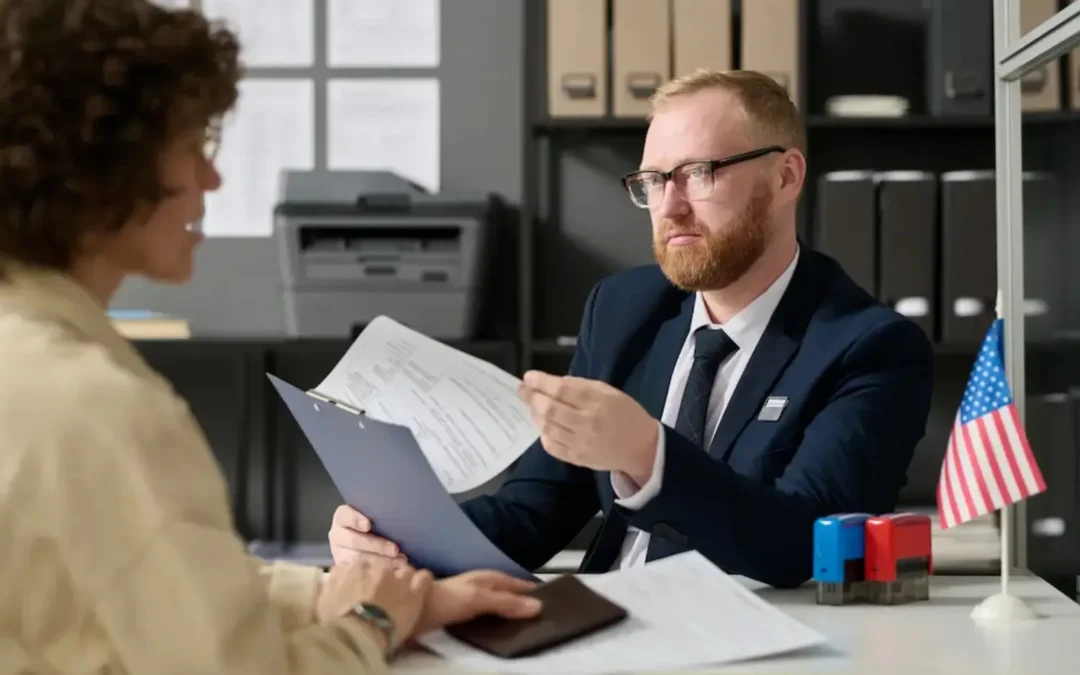
At a marriage green card interview, a USCIS officer will ask both spouses about how they met, their daily life together, their finances, and their plans for the future. The officer is evaluating whether the marriage is genuine. Both spouses must attend, and the interview typically lasts 15 to 30 minutes at a local USCIS field office.
What the Interview Is For
The adjustment of status interview is USCIS’s opportunity to verify that the marriage is real, not entered into for the purpose of evading immigration law. The officer also confirms the information in your application, reviews your documents, and evaluates whether any ground of inadmissibility applies.
This is different from the K-1 consular interview, where only the fiance is present and the focus is on the relationship and intent to marry. At the adjustment interview, you are already married, and the focus shifts to whether the marriage is genuine and ongoing. See the K-1 consular interview process for how that earlier interview works.
What to Bring
Bring originals of everything you submitted copies of, plus updated evidence of the relationship since your filing date. That includes valid passports for both spouses, your marriage certificate, birth certificates, the interview appointment notice (Form I-797C), copies of the filed I-130 and I-485 with all supporting documents, updated financial evidence (recent pay stubs, tax returns filed since the application), joint bank statements, joint lease or mortgage documents, utility bills showing the same address, health or life insurance showing the spouse as beneficiary, photographs together taken since the filing date, and any other evidence showing the marriage is ongoing and real.
More is better than less. If you have it, bring it.
What the Officer Will Ask
Questions About Your Relationship
How did you meet? When did you start dating? How long did you date before getting engaged? Who proposed? Where were you married? Who was at the wedding? How did your families react?
These questions test whether you both tell the same story naturally, without rehearsed-sounding answers.
Questions About Your Daily Life Together
What is your address? How many bedrooms does your home have? Who does the cooking? What did you have for dinner last night? What side of the bed do you sleep on? What are your spouse’s daily habits? Do you have pets?
These questions are not trick questions. They are designed to confirm that you actually live together. Couples who live together can answer them without thinking. Couples who do not live together tend to hesitate.
Questions About Your Finances
Do you have joint bank accounts? Who pays the rent? How much does your spouse earn? Where does your spouse work? Do you file taxes jointly?
Financial entanglement is one of the strongest indicators of a genuine marriage. If your finances are still entirely separate, be prepared to explain why.
Questions About Your Future Plans
Do you plan to have children? Have you discussed where you want to live long-term? Have you made any major purchases together?
The officer is looking for a couple that talks about and plans a future together, the way married couples do.
What a Stokes Interview Is
If the officer has concerns about whether the marriage is genuine, they may schedule a Stokes interview (also called a fraud interview). In a Stokes interview, each spouse is interviewed separately, and the answers are compared.
This does not mean your case is being denied. It means the officer wants more information. Stokes interviews are more detailed and more stressful, but they are not unusual, and they are not automatic denials. Many couples pass them.
If you are told you will have a Stokes interview, consider bringing an attorney. The stakes are higher, and having counsel present can help ensure the process is fair. See what counts as relationship evidence for the documentation that matters most in these situations.
What Happens After the Interview
Approved
Many cases are approved at the interview or shortly after. The officer may tell you on the spot, or you may receive an approval notice by mail within a few weeks. The green card itself arrives separately.
Request for Additional Evidence
Sometimes the officer needs additional documentation before making a decision. You will receive a written request with a deadline. Respond promptly and completely.
Referred for Further Review
In some cases, the officer refers the case for additional review, which can mean a fraud investigation, a background check, or a supervisor review. This extends the timeline but is not a denial.
How to Prepare Without Overthinking It
Review the facts of your relationship together. Not to memorize answers, but to make sure you can both talk about the same events consistently. Look through photos together. Talk about when you met, who proposed, and the details of your daily routine.
The goal is not to sound rehearsed. The goal is to sound like two people who actually know each other. If you have been living together and sharing a life, the interview is a conversation, not an interrogation.
Organize your documents in a binder with tabs. The easier it is for the officer to find what they need, the smoother the interview goes.
Mistakes That Hurt at the Interview
Contradicting each other on basic facts, such as when you met or where you live. Bringing no updated evidence since the filing date. Being unable to answer simple questions about daily life together. Showing up without originals of documents you submitted copies of. Volunteering information that was not asked for, especially about immigration history or prior applications. Getting visibly nervous to the point of being evasive. Arguing with each other during the interview.
The most common problem is not fraud. It is lack of preparation. Couples who bring strong evidence and answer questions naturally tend to be approved. Couples who show up unprepared give officers a reason to dig deeper.
Frequently Asked Questions
How long does the marriage green card interview take?
Most interviews last 15 to 30 minutes. More complex cases or Stokes interviews can take longer. Plan to be at the USCIS office for one to two hours total, including waiting time.
Can I bring a lawyer to the interview?
Yes. You have the right to bring an attorney or accredited representative. For straightforward cases, it is not always necessary. For cases with complicating factors (prior immigration issues, prior marriages, a Stokes interview), it is strongly recommended.
What if my spouse and I give different answers?
Minor inconsistencies are normal and expected. Major contradictions, such as different stories about when you met or whether you live together, can cause the officer to schedule a Stokes interview or request additional evidence.
Is this different from the K-1 interview?
Yes. The K-1 interview happens at a US consulate abroad and only the fiance attends. The adjustment interview happens at a USCIS field office in the United States and both spouses attend. The questions and focus are different.
What if our interview is not scheduled for months?
Interview scheduling depends on the local USCIS field office’s backlog. Some offices schedule within a few months of filing. Others take over a year. You can check estimated wait times for your local office on the USCIS processing times tool.
Practice Before Your Appointment
If you want to walk through the kinds of questions the officer will ask before your actual interview, that is something our team can help with. It is not about memorizing answers. It is about being comfortable and organized.
Book a free consultation to prepare for your interview and bring your evidence binder. We can tell you what is strong, what is missing, and what the officer is most likely to focus on. See the adjustment of status process for where the interview fits in the larger filing.