
Legally reviewed by Chad Pemberton, J.D., Managing Attorney, Pemberton Law, PLLC. Last updated: November 15, 2026.
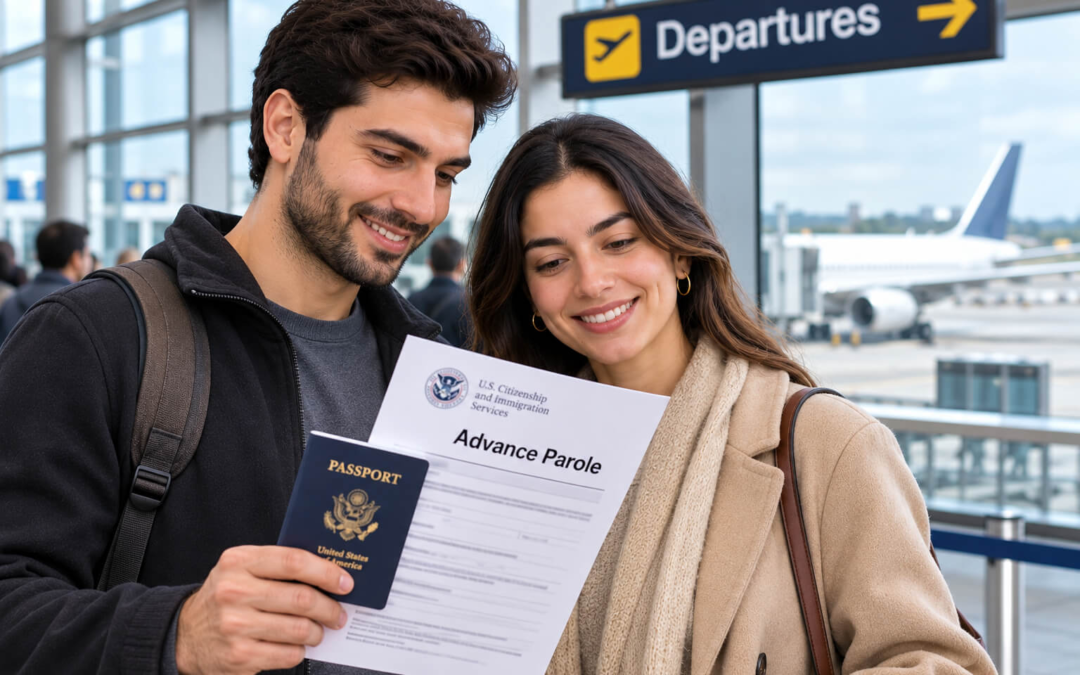
Advance parole is a travel document that lets a green card applicant leave the U.S. and return while their Form I-485 is pending. Without it, leaving the country usually means USCIS treats your green card application as abandoned. You apply on Form I-131, often together with your I-485, and you should not travel until the document is in your hands.
The holidays, a family wedding, or a sick parent abroad can make travel feel urgent. We understand. But this is one of the most costly mistakes a couple can make during a marriage-based case. Here is how to travel the right way.
Why You Need Advance Parole
When you file to adjust status, you are asking to become a permanent resident from inside the U.S. If you leave before the decision, USCIS generally considers that you gave up the request. You would then have to start over, often through a consular case abroad, and you may not be able to come back in the meantime.
There is a narrow exception for people who are maintaining valid H-1B or L-1 status (and their H-4 or L-2 dependents), who can usually travel and return on that visa. Almost everyone else in a marriage case, including F-1 students, K-1 entrants, and visitors who married, needs advance parole. If you are a student, see our guide to F-1 visa marriage to a U.S. citizen.
How to Apply
- File Form I-131. Most couples file it with the I-485 as part of the initial package. You can also file it later while the I-485 is pending. See the USCIS Form I-131 page for current instructions and fees.
- Attend biometrics. Your photo and fingerprints from the biometrics appointment are used for the document.
- Wait for approval. Many applicants receive a “combo card,” a single card that works as both a work permit and an advance parole document.
- Travel only with the physical document. An approval notice alone is usually not enough to board or re-enter.
Emergency Advance Parole
If a true emergency arises, such as a parent’s serious illness or a death in the family, you can ask for expedited or emergency advance parole. This usually involves contacting the USCIS Contact Center to request an appointment at a local field office and bringing proof of the emergency, such as a doctor’s letter or death certificate, plus your I-485 receipt notice, passport photos, and a completed I-131. Approval is not guaranteed and depends on the facts and the office.
Risks to Understand Before You Travel
| Risk | What It Means |
|---|---|
| Inspection at return | Advance parole lets you request entry. A border officer still inspects you, and entry is not guaranteed. |
| Missed appointments | If USCIS schedules your interview or biometrics while you are away and you miss it, your case can be delayed or denied. |
| Past immigration violations | Applicants with unlawful presence, prior removal orders, or entries without inspection face extra risks. Get legal advice first. |
| Document expiry | You must return before the advance parole document expires. |
A Note on Unlawful Presence
Leaving the U.S. after more than 180 days of unlawful presence can normally trigger a three-year or ten-year bar. A Board of Immigration Appeals decision, Matter of Arrabally and Yerrabelly (2012), held that traveling on advance parole while an I-485 is pending is generally not a “departure” for this purpose. Even so, every case is different. If you ever overstayed, entered without inspection, or had a prior removal, speak with an attorney before you book anything.
Planning Your Trip
- Do not book flights until you have the physical document.
- Keep the trip short and check your USCIS account and mail while away.
- Carry your passport, advance parole document, and I-485 receipt notice.
- Bring copies of your marriage certificate and proof of your pending case.
- Make sure someone at home can tell you immediately if an interview notice arrives.
Your case status will show when your travel document is approved and mailed. Our guide to USCIS case status messages explains the wording.
Do You Even Need to Travel?
If the trip is optional, waiting for your green card is the safest choice. Once you have it, you can travel freely, as long as you do not spend long periods abroad. Many couples choose to file the I-131 anyway, just in case an emergency arises. Our guide to marriage green card costs can help you decide whether the extra fee is worth it.
What to Pack in Your Travel Folder
| Document | Why You Need It |
|---|---|
| Passport, valid for the whole trip | Required to travel and to present at the border. |
| Advance parole document or combo card (original) | Allows you to request re-entry while the I-485 is pending. |
| I-485 receipt notice (Form I-797C) | Shows your green card case is pending. |
| Copy of your marriage certificate | Supports your basis for adjustment. |
| Work permit, if separate | Useful as additional U.S. identification. |
| Contact details for your attorney or preparer | In case there is a problem at the border. |
At the Border on Your Return
When you land, present your passport and advance parole document to the Customs and Border Protection officer. You will be “paroled” into the U.S. rather than admitted on a visa. Check the electronic I-94 record afterwards to make sure it shows parole and the correct dates. If anything looks wrong, contact CBP to correct it before your green card interview.
Travel After the Green Card Is Approved
Once your green card arrives, you no longer need advance parole. Travel with your passport and green card. Keep trips reasonable in length. Spending more than six months abroad at a time can raise questions about your residence, and long absences can delay citizenship through marriage. If your green card is conditional, carry the extension notice you receive after filing Form I-751.
What This Means for You
Do not leave the U.S. while your I-485 is pending unless you have an approved advance parole document in hand, or you are maintaining valid H or L status. File Form I-131 early, plan around your interview, and get legal advice first if you have any history of overstays or unlawful entry.
Need to travel during your case? Our team prepares marriage-based green card applications including advance parole, with attorney review. Book a free consultation today.
Frequently Asked Questions
Can I travel while my marriage green card is pending?
Only with an approved advance parole document, unless you are maintaining valid H-1B or L-1 status or are their dependent. Leaving without it usually causes USCIS to treat your I-485 as abandoned.
What is a combo card?
A combo card is a single card that serves as both a work permit and an advance parole travel document. Many marriage-based applicants who file Forms I-765 and I-131 with their I-485 receive one.
How long does advance parole take?
Processing times vary and change often. Check the USCIS processing times page for Form I-131. If you have a genuine emergency, you can ask for expedited or emergency processing with supporting proof.
Can a K-1 spouse travel before getting the green card?
Not safely without advance parole. After a K-1 entry and marriage, the spouse files an I-485 and needs advance parole to leave and return while it is pending.
Is re-entry guaranteed with advance parole?
No. Advance parole allows you to request entry, but a border officer still inspects you. People with past immigration or criminal issues should get legal advice before traveling.
This article is general information about U.S. immigration procedure. It is not legal advice and it does not create an attorney client relationship. Immigration rules change often. For guidance on your own case, book a free consultation with the Married Legally team or speak with a licensed immigration attorney.
Legal Disclaimer: The information provided in this article is for general educational and informational purposes only. It is not intended to constitute legal advice or create an attorney-client relationship. Laws and legal requirements may change and vary depending on individual circumstances and jurisdiction. Please consult a qualified attorney regarding your specific situation.

Written by: Eric Richards, M.A.
Eric Richards, M.A., brings a background in neuroscience coaching, personal development, relationships, and human behavior to Married Legally. Eric is a Certified Neuroscience Coach with additional professional training in life coaching, personal transformation, happiness coaching, life purpose coaching, and business coaching. His certifications include training through Transformation Academy.

Legally Reviewed by: Chad Pemberton, J.D.
Chad Pemberton is a Utah-licensed attorney and owner of Pemberton Law, PLLC. He earned his Juris Doctor from law school in Michigan and has experience in U.S. immigration law and marriage law. Chad has reviewed this article to help ensure its legal information is accurate, relevant, and helpful to readers.