
Legally reviewed by Chad Pemberton, J.D., Managing Attorney, Pemberton Law, PLLC. Last updated: November 15, 2026.
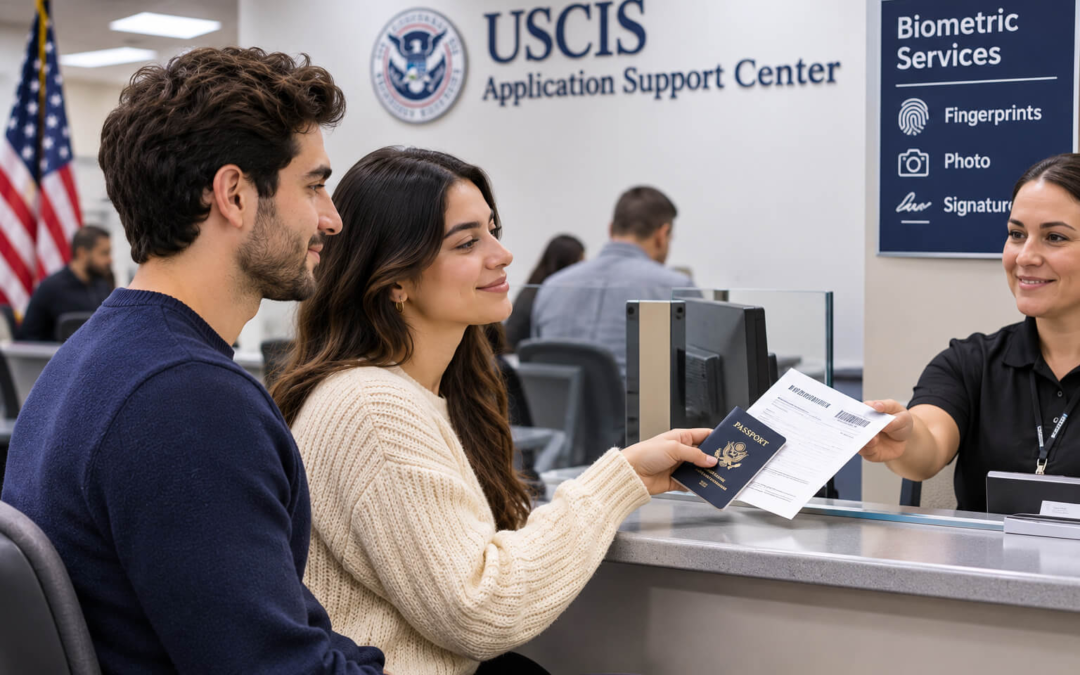
A USCIS biometrics appointment is a short visit to an Application Support Center (ASC) where you give your fingerprints, a photo, and a digital signature. USCIS uses them for background checks and to produce your green card and work permit. The visit usually takes 15 to 30 minutes. Bring your appointment notice and a valid photo ID, and do not miss it.
For many couples, the biometrics notice is the first sign that their green card case is really moving. It is also one of the easiest steps to get right. Here is everything you need to know.
When You Get the Biometrics Notice
After USCIS accepts your filing, it sends receipt notices for each form. A few weeks later, the applicant usually receives a separate Form I-797C appointment notice for biometrics. It lists the date, time, and ASC address. In marriage-based cases, it is typically triggered by the Form I-485 green card application. Forms I-751 and N-400 also lead to biometrics appointments later on.
Watch your mail and your USCIS online account closely after filing. Our guide to USCIS case status messages explains the updates you will see before and after the appointment.
What to Bring
- Your appointment notice (Form I-797C). This is required.
- A valid government photo ID, such as a passport, driver’s license, state ID, or current work permit.
- Your green card or work permit, if you already have one.
- Glasses if you normally wear them, because you may be asked to remove them for the photo.
Leave bags and unnecessary items at home or in the car if you can. Security screening is similar to other federal buildings. Some centers do not allow phones to be used inside, so plan ahead.
What Happens at the Appointment
- Check-in. A guard or staff member checks your notice and ID.
- Waiting. You may wait briefly until your number is called.
- Fingerprints. A technician scans your fingerprints on a digital scanner. There is no ink.
- Photo. Your photo is taken for your future green card or work permit.
- Signature. You sign on an electronic pad.
- Stamp. Your notice is usually stamped to show you attended. Keep it in a safe place.
There is no interview at the ASC. Staff will not ask about your marriage or your case. They only collect your biometrics.
Tips for the Day
- Arrive about 15 minutes early, not hours early.
- Dress as you would like to appear on your green card.
- Moisturize your hands if your fingertips are very dry, which can make scans difficult.
- Bring an interpreter only if you truly need one, and check the notice for any rules about guests.
Can You Reschedule?
Yes, but do it before the appointment date and only for a good reason, such as illness, a family emergency, or a conflict you cannot move. You can usually request a new date through your USCIS online account or by contacting the USCIS Contact Center. Repeated rescheduling slows your case down. Some centers also accept walk-ins earlier than the scheduled date, but policies vary by location, so do not rely on it.
More guidance is on the USCIS page on preparing for your biometric services appointment.
What If You Miss It?
Missing your biometrics appointment without rescheduling is serious. USCIS may treat your application as abandoned and deny it. If you missed an appointment, contact USCIS right away, explain why, and ask for a new appointment. Keep proof of any emergency that caused the missed date.
What Happens After Biometrics?
Your fingerprints are sent for FBI and other background checks. Your case status may update to show that fingerprints were taken. Then the case waits for the next stage:
| Next Step | What It Means |
|---|---|
| Work permit and travel document | If you filed Forms I-765 and I-131, these are often approved after biometrics, sometimes as one combo card. |
| Request for evidence | If something is missing, USCIS sends an RFE. See our RFE response guide. |
| Interview | Most marriage-based cases are scheduled for an interview with both spouses. |
| Approval | Some cases are approved without an interview. |
Use this waiting time to prepare. Review our list of marriage green card interview questions and keep building your bona fide marriage evidence.
Can You Travel After Biometrics?
Going to biometrics does not give you permission to leave the U.S. If you leave while your I-485 is pending without advance parole, your application will usually be treated as abandoned. Read our guide to advance parole for marriage green card applicants first.
Special Situations
You Have Moved Since Filing
Update your address with USCIS within 10 days of moving. If the appointment is scheduled at a center far from your new home, ask to reschedule at a closer one. Our guide to USCIS case status messages explains how to check that your address change was recorded.
Your Fingerprints Cannot Be Read
Some people have worn fingerprints from manual work, age, or skin conditions. If the scanner cannot read your prints, staff will try again and may note the problem. USCIS can ask you to return or may run a name-based check instead. Bring any medical notes that explain the issue.
Children in the Case
If children are part of the case, such as K-2 or stepchildren adjusting status, each child receives their own appointment notice. Very young children may not need fingerprints, but they may still need to attend for a photo. Follow each notice. Our guide to the K-2 visa for a fiancé’s children covers the green card steps for children.
You Need Accommodations
If you use a wheelchair, have a medical condition, or need another accommodation, you can usually request it through your online account or the Contact Center before the appointment. Request it early so the center can prepare.
Your Name Has Changed Since Filing
If you changed your name after marriage, bring proof of the change, such as your marriage certificate, along with ID. Make sure the name on your ID matches either your filing or your documented new name.
What This Means for You
Biometrics is a short, simple step, but it is mandatory. Bring your notice and photo ID, arrive a little early, and keep your stamped notice. Reschedule only if you truly must, and do it before the date. Then use the wait to prepare your evidence and your interview answers.
Want help keeping your case on track from filing to approval? Our team supports couples through every stage of marriage-based immigration. Book a free consultation today.
Frequently Asked Questions
How long does a biometrics appointment take?
Usually 15 to 30 minutes once you are called, though waiting times vary by center. The appointment only involves fingerprints, a photo, and an electronic signature. There are no questions about your marriage or your case.
Does the U.S. citizen spouse need to attend biometrics?
Usually not for the I-485. The notice is sent to the applicant. A petitioner only attends if they receive their own appointment notice, which happens in some cases. Check each notice carefully.
Can I go to biometrics early?
Some Application Support Centers accept walk-ins before the scheduled date, but it depends on the center and its workload. Do not assume it will work. If you are turned away, attend on your scheduled date.
How long after biometrics is the interview?
It varies widely by field office. Some couples are interviewed within a few months, others wait longer. Check the USCIS processing times page for your local office and watch your online account for updates.
Do I need biometrics again for removing conditions?
Often yes. When you file Form I-751 to remove conditions, USCIS usually schedules a new biometrics appointment or reuses your earlier biometrics. Follow the instructions in the notice you receive.
This article is general information about U.S. immigration procedure. It is not legal advice and it does not create an attorney client relationship. Immigration rules change often. For guidance on your own case, book a free consultation with the Married Legally team or speak with a licensed immigration attorney.
Legal Disclaimer: The information provided in this article is for general educational and informational purposes only. It is not intended to constitute legal advice or create an attorney-client relationship. Laws and legal requirements may change and vary depending on individual circumstances and jurisdiction. Please consult a qualified attorney regarding your specific situation.
Written by: Eric Richards, M.A.
Eric Richards, M.A., brings a background in neuroscience coaching, personal development, relationships, and human behavior to Married Legally. Eric is a Certified Neuroscience Coach with additional professional training in life coaching, personal transformation, happiness coaching, life purpose coaching, and business coaching. His certifications include training through Transformation Academy.

Legally Reviewed by: Chad Pemberton, J.D.
Chad Pemberton is a Utah-licensed attorney and owner of Pemberton Law, PLLC. He earned his Juris Doctor from law school in Michigan and has experience in U.S. immigration law and marriage law. Chad has reviewed this article to help ensure its legal information is accurate, relevant, and helpful to readers.