
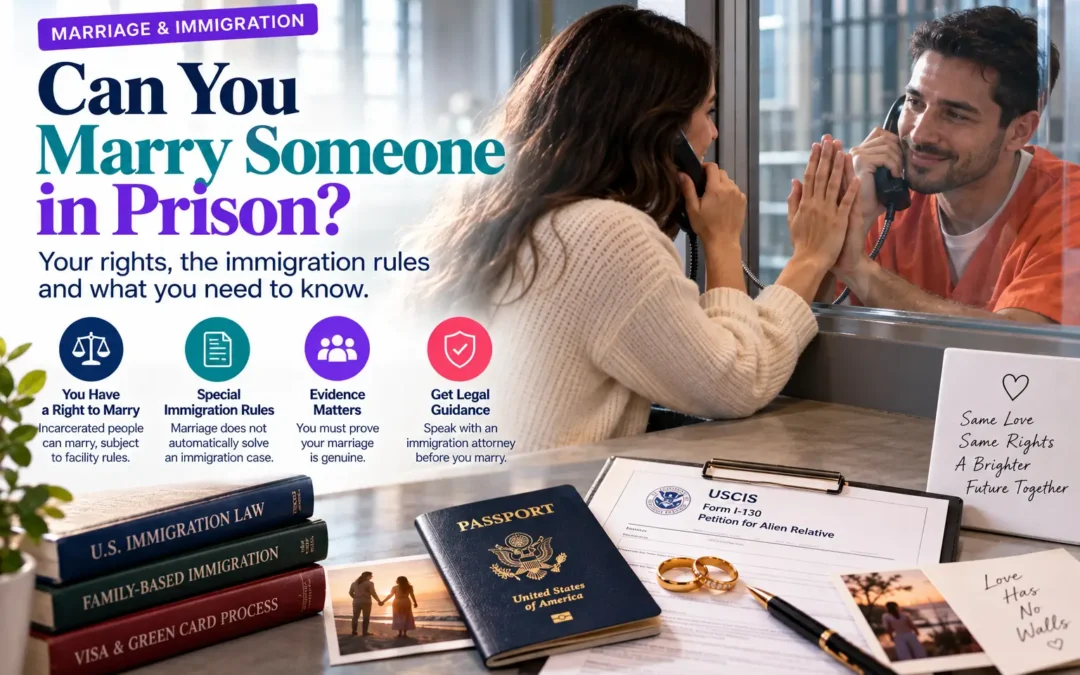
You can legally marry someone in prison or immigration detention, but marriage does not automatically solve an immigration problem. USCIS still requires a valid, genuine marriage, a qualified financial sponsor, and admissibility. Special rules apply to marriages during removal proceedings and to petitioners with certain criminal convictions.
When someone you love is incarcerated, marriage can feel like the one thing you still control. For couples where one partner is not a U.S. citizen, it often feels like a lifeline too. But immigration law treats these marriages carefully, and a few rules catch couples by surprise. Here is what you need to know before you marry, so your marriage helps rather than complicates the case.
The Right to Marry While Incarcerated
The U.S. Supreme Court held in Turner v. Safley (1987) that incarcerated people have a constitutional right to marry, subject to reasonable prison regulations. Facilities set the process. In federal prisons, the rules in 28 CFR Part 551 require the warden’s approval and a request from the incarcerated person.
The practical steps for the wedding itself, from facility approval to the license and ceremony, are covered on our how to marry someone in prison page. This article focuses on what happens next if immigration is involved.
Three Common Situations
| Situation | Key Immigration Issue |
|---|---|
| A U.S. citizen in prison marrying a foreign national | Sponsorship, income, and criminal-record restrictions on petitioners |
| A noncitizen in prison marrying a U.S. citizen | Criminal grounds of inadmissibility or removal |
| A noncitizen in immigration detention or removal proceedings | Heightened proof that the marriage is genuine |
Situation 1: The U.S. Citizen Is Incarcerated
An incarcerated U.S. citizen can generally still file Form I-130 for a spouse. Our guide on how to file an I-130 for your spouse explains the basics. But two issues often block or delay these cases.
The Affidavit of Support
The petitioner must sign Form I-864 and show income at or above the required level. An incarcerated petitioner usually has little or no income, so a joint sponsor is typically needed. Our guide to sponsor income requirements explains how joint sponsors work, and our post on the new Form I-864 edition covers the latest form changes.
The Adam Walsh Act Restriction
Under INA 204(a)(1)(A)(viii), a U.S. citizen convicted of certain specified offenses against a minor generally cannot petition for a family member unless the government determines, in its discretion, that the petitioner poses no risk to the beneficiary. This rule surprises many couples, and it is difficult to overcome.
Situation 2: The Noncitizen Is Incarcerated
Marriage to a U.S. citizen does not erase a criminal record. Many criminal convictions create grounds of inadmissibility or removability. Depending on the offense, the noncitizen spouse may be ineligible for a green card, may need a waiver, or may face removal after release regardless of the marriage.
The exact effect depends on the conviction, the sentence, and the person’s immigration history. This is not something to estimate from the internet. Speak with an immigration attorney before relying on marriage as a solution. Our post on whether you need an immigration attorney explains why cases like this need professional review.
Situation 3: Marriage During Removal Proceedings
If the noncitizen is in immigration detention or removal proceedings when you marry, extra scrutiny applies. Under INA 245(e) and INA 204(g), a marriage entered during proceedings generally cannot be the basis of a green card unless the couple proves, by clear and convincing evidence, that the marriage is genuine and was not entered to obtain immigration benefits. This is a higher standard than usual.
Clear and convincing evidence usually means documentation of a relationship that existed before the proceedings began, such as shared housing, finances, children, and a long history together.
[CLIENT INPUT NEEDED: one real, anonymized observation from the Married Legally team, for example families who assumed marriage would stop a removal case.]
Proving a Real Marriage When You Cannot Live Together
USCIS will not expect you to share a home while one partner is incarcerated. It will still look for evidence that the relationship is genuine. Helpful evidence includes:
- Visitation logs showing regular visits.
- Letters, emails, and recorded call histories.
- Commissary deposits and other financial support.
- Evidence of the relationship before incarceration.
- Photos together over time.
- Affidavits from family and friends who know you as a couple.
- Shared plans, such as housing or employment after release.
Officers watch for the signs covered in our guide to marriage fraud red flags, and incarceration is one of the circumstances that draws closer review. Consistent, varied evidence is your best answer.
Interviews and Communication With USCIS
Marriage-based cases usually include an interview. When one spouse is incarcerated, attending together can be difficult or impossible. USCIS may reschedule, interview one spouse, or request more documents instead. Tell USCIS about the incarceration early and in writing, and keep copies of everything you send.
Mail can also be slow inside facilities. Use an outside mailing address for USCIS notices if allowed, such as the non-incarcerated spouse’s address, so deadlines are not missed. Missing a biometrics appointment, interview, or request for evidence can lead to a denial, and restarting a case costs time and money.
Release dates matter too. If release is expected soon, it may make sense to time filings so both spouses can attend the interview together. If a sentence is long, an attorney can help you weigh whether to file now or later. There is no right answer for every couple.
Why the Type of Ceremony Matters
For immigration purposes, U.S. law treats marriages where the spouses were not physically together during the ceremony carefully. Under INA 101(a)(35), such a marriage is generally recognized only once it has been consummated, which may not be possible while one partner is incarcerated.
If immigration is the goal, a ceremony where both partners are physically present, such as an approved in-facility ceremony, may be the safer route. An attorney can help you choose the right type of ceremony before you marry. Our page on online marriage for immigration explains when online ceremonies fit immigration cases.
Before You Marry: Checklist
- Confirm the facility’s marriage approval process and timeline.
- Get both partners’ immigration and criminal histories reviewed by an attorney.
- Check whether removal proceedings are pending.
- Confirm both partners are legally free to marry, using our guide to proving a prior marriage ended.
- Choose a ceremony type that suits your immigration goals.
- Plan for a joint sponsor if the petitioner has limited income.
- Start collecting relationship evidence now.
What This Means for You
You have the right to marry an incarcerated partner, and that marriage can support an immigration case. But it does not override criminal grounds, sponsor requirements, or the stricter rules during removal proceedings. Get legal advice before the wedding, choose the right type of ceremony, and document your relationship carefully.
Facing this situation? Our immigration services include attorney review of complex family cases, and our family-based immigration team can explain your options. Book a free consultation to talk it through confidentially.
Frequently Asked Questions
Can you marry someone who is in prison?
Yes. Incarcerated people have a constitutional right to marry, subject to reasonable prison rules. Most facilities require approval from the warden or administration, a written request from the incarcerated person, and a valid marriage license. Procedures and wait times vary by facility and state.
Will marrying a U.S. citizen stop deportation?
Not automatically. Marriage can make someone eligible to apply for a green card, but criminal convictions, immigration history, and pending removal proceedings can still block that path. Marriages entered during proceedings face a higher standard of proof. An attorney should review the case before you rely on marriage.
Can an incarcerated U.S. citizen sponsor a spouse?
Often, yes, by filing Form I-130. However, the petitioner must meet the affidavit of support requirements, which usually means finding a joint sponsor. Citizens convicted of certain offenses against minors face a strict bar under the Adam Walsh Act that is difficult to overcome.
How do we prove our marriage is real if we cannot live together?
Use visitation logs, letters, call records, financial support such as commissary deposits, evidence of your relationship before incarceration, photos, and affidavits from people who know you. USCIS does not expect a shared home while one partner is incarcerated, but it does expect consistent proof of a genuine relationship.
Is an online wedding with an incarcerated partner valid for immigration?
It may be legally valid as a marriage, but immigration law generally recognizes marriages where the spouses were not physically together only after consummation. That can be a problem while one partner is incarcerated. If immigration is a goal, speak with an attorney about whether an in-person facility ceremony is better.
This article is general information about U.S. immigration procedure. It is not legal advice and it does not create an attorney client relationship. Immigration rules change often. For guidance on your own case, book a free consultation with the Married Legally team or speak with a licensed immigration attorney.