
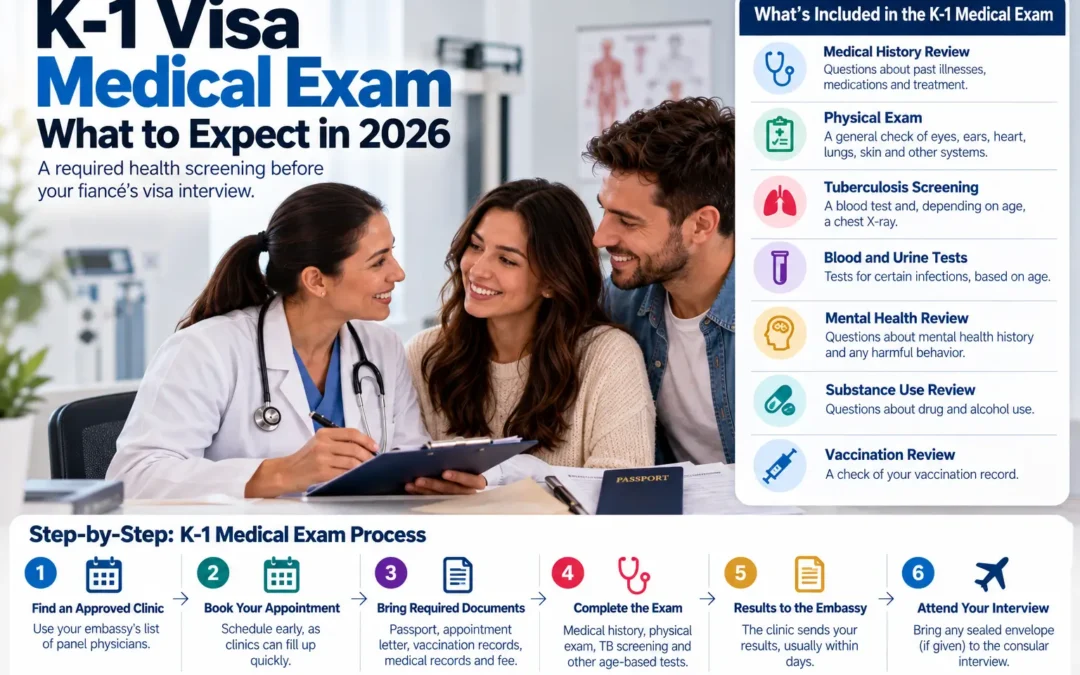
The K-1 visa medical exam is a required health screening done by an embassy-approved panel physician before your fiancé’s visa interview. It includes a medical history review, a physical exam, tuberculosis screening, and age-based tests. It is not a full checkup. It screens only for conditions that matter under U.S. immigration law.
After months of forms and waiting, the interview date finally arrives, and with it a new task: the medical. For many fiancés, it is the most nerve-racking step, because it feels personal and out of their control. In reality, most applicants pass without trouble. The delays that do happen usually come from scheduling, paperwork, or tuberculosis follow-up, and most of them can be planned for.
Why the Medical Exam Is Required
U.S. immigration law lists certain health-related grounds of inadmissibility. The medical exam checks for those conditions, so the consular officer can decide whether your fiancé is eligible for the visa. The doctor does not make that decision. As the State Department explains in its medical examination FAQs, the exam is not a complete physical. It screens for specific conditions only.
The rules doctors follow are set by the Centers for Disease Control and Prevention in its technical instructions for panel physicians. If you want the bigger picture of the fiancé visa process first, read our guide to K-1 fiancé visa requirements and timeline.
Who Does the Exam?
Only a panel physician approved by the U.S. embassy or consulate handling the case can perform the K-1 medical. Your fiancé’s own doctor cannot do it, and results from an unapproved clinic will not be accepted.
Each embassy publishes its list of panel physicians, usually on its website or in the interview instructions. Some countries have only one or two approved clinics, so appointments can fill up quickly. Book as soon as the interview date is known.
What Happens at the K-1 Medical Exam
| Part of the Exam | What It Involves |
|---|---|
| Medical history review | Questions about past illnesses, hospital stays, medications, and treatment |
| Physical exam | A general check of eyes, ears, heart, lungs, skin, and other systems |
| Tuberculosis screening | A blood test and, depending on age, a chest X-ray |
| Blood and urine tests | Tests for certain infections, based on age |
| Mental health review | Questions about mental health history and any harmful behavior |
| Substance use review | Questions about drug and alcohol use |
| Vaccination review | A check of your vaccination record |
The exact tests depend on age and local instructions. Children traveling on a K-2 visa need their own medical exam too, with tests appropriate for their age.
Honesty Matters
Answer every question truthfully, including questions about past treatment, mental health, and substance use. Many conditions are not a barrier on their own, especially when treated or in remission. Hiding something that later comes to light causes far bigger problems than the condition itself.
What to Bring
- Valid passport.
- Interview appointment letter.
- Passport photos, if the clinic asks for them.
- Your vaccination records or immunization card.
- A list of current medications.
- Medical records for any chronic or past serious condition, including tuberculosis treatment.
- Glasses or contact lenses, if you wear them.
- The exam fee, paid directly to the clinic.
Vaccinations: Now or Later?
K-1 applicants are in a special position. Vaccination requirements are generally not enforced at the K-1 visa stage, but they do apply when your fiancé later applies for a green card. Many panel physicians still review vaccinations and recommend completing them now.
Getting vaccinated during the overseas exam can save time and money later. When your fiancé files Form I-485 within one year of the overseas medical, USCIS generally does not require a new full exam. They submit the vaccination section of Form I-693, completed by a U.S. civil surgeon. Our guide to getting a green card after a K-1 marriage explains where this fits.
What Can Delay the Medical Exam
Tuberculosis Follow-Up
This is the most common cause of delay. If the chest X-ray or blood test suggests possible tuberculosis, the doctor will order sputum tests. Cultures can take around eight weeks. If treatment is needed, it must be completed before the visa can be issued, which can add months.
Clinic Backlogs
Busy embassies often have busy panel physicians. In high-volume posts, such as Manila, couples should book the medical immediately. Our page on Philippines to USA immigration covers other local steps that add time.
Missing Records
Arriving without records of past treatment, especially for tuberculosis or a serious condition, can mean a second visit or a request for more documents.
Pregnancy
A pregnant applicant can still complete the medical exam. The chest X-ray may be postponed or done with protective shielding, depending on the clinic’s guidance and the applicant’s choice. If the X-ray is delayed until after the birth, the whole case can slow down. Tell the clinic about a pregnancy when you book, so they can explain the options and plan the timing. Bring prenatal records, since the doctor may ask about your due date and care.
Class A or Class B Findings
A Class A condition makes an applicant inadmissible unless a waiver is granted. A Class B condition is a significant health issue that does not block the visa but may require follow-up after arrival. Either can slow the process, and a Class A finding needs legal advice.
[CLIENT INPUT NEEDED: one real, anonymized observation from the Married Legally team, for example how tuberculosis follow-up has affected couples’ timelines.]
After the Exam
The panel physician sends the results to the embassy, usually electronically. Some clinics hand applicants a sealed envelope. If you receive one, do not open it. Bring it to the interview exactly as instructed.
Medical results are generally valid for a limited time, often six months, and the K-1 visa’s validity can be tied to that window. If the interview is postponed, the medical may expire and need to be redone. Our K-1 interview preparation guide explains the rest of interview day.
Medical Exam Checklist
- Find the embassy’s approved panel physicians.
- Book the exam as soon as the interview date arrives.
- Gather vaccination records and past medical records.
- Answer all questions honestly.
- Complete recommended vaccinations if you can.
- Keep any sealed results unopened.
- Keep copies of your vaccination record for the green card stage.
Health-related issues are also one of the less obvious reasons cases stall, as our post on common K-1 denial reasons explains. Spouses applying for a CR-1 visa go through the same exam, covered in our guide to CR-1 visa processing time.
What This Means for You
The K-1 medical exam is routine for most applicants. Book early with an approved panel physician, bring complete records, answer honestly, and consider getting vaccinations done now. If tuberculosis or another condition is flagged, follow the doctor’s instructions promptly and get legal advice if needed.
Want help keeping your fiancé visa on schedule? Our team handles K-1 visa qualification and the full fiancé visa application with attorney oversight. Book a free consultation today.
Frequently Asked Questions
How long does the K-1 medical exam take?
The appointment itself often takes a few hours to a full day, depending on the clinic and whether a chest X-ray is done on site. Results are usually sent to the embassy within days. If tuberculosis follow-up is needed, sputum cultures can take about eight weeks before the exam is complete.
Can my own doctor do the K-1 medical?
No. Only a panel physician approved by the U.S. embassy or consulate handling your case can perform the K-1 medical exam. Results from any other doctor are not accepted. Check your embassy’s website or interview instructions for the list of approved physicians.
Do K-1 applicants need vaccinations?
Vaccination requirements are generally not enforced at the K-1 visa stage, but they apply when your fiancé applies for a green card after the wedding. Completing vaccinations during the overseas medical can make the I-485 stage simpler, because the record can be carried over by a U.S. civil surgeon.
Does my fiancé need a new medical for the green card?
Usually not, if Form I-485 is filed within one year of the overseas medical exam. In that case, your fiancé generally submits only the vaccination section of Form I-693, completed by a U.S. civil surgeon. If more than a year has passed, a full new exam is typically required.
Can a medical condition stop the K-1 visa?
Some conditions, called Class A conditions, can make an applicant inadmissible unless treated or waived. Active tuberculosis that requires treatment is one example. Many other conditions are not a barrier. If the panel physician flags a condition, speak with an immigration attorney about treatment timing and waiver options.
This article is general information about U.S. immigration procedure. It is not legal advice and it does not create an attorney client relationship. Immigration rules change often. For guidance on your own case, book a free consultation with the Married Legally team or speak with a licensed immigration attorney.