
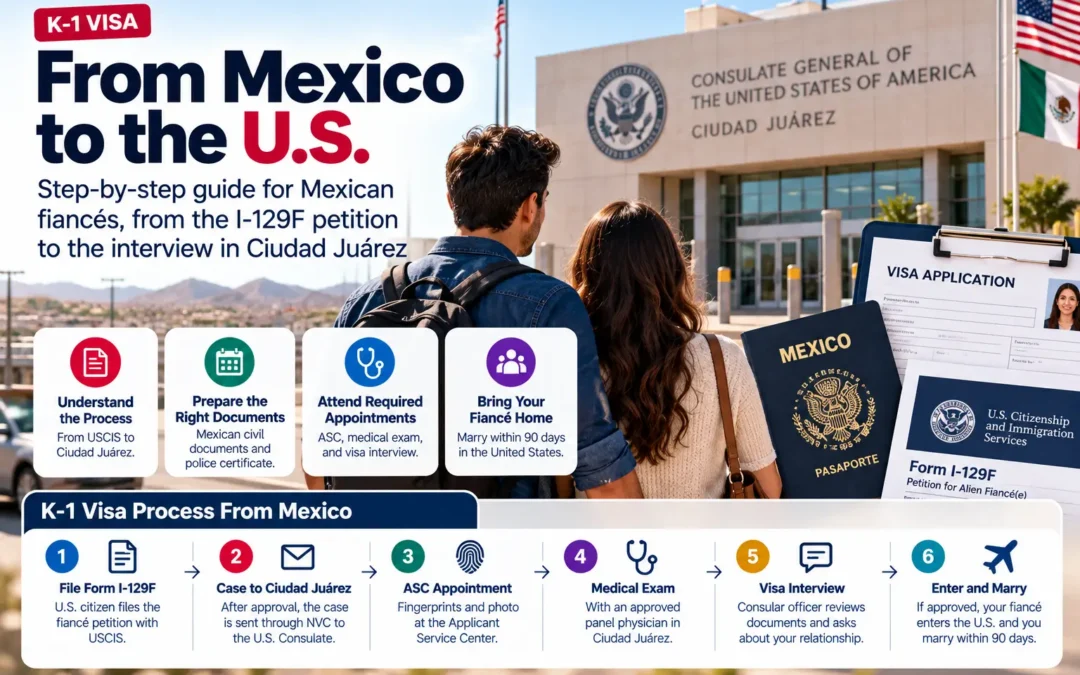
For a K-1 visa from Mexico, the U.S. citizen files Form I-129F with USCIS. Once approved, the case goes to the U.S. Consulate General in Ciudad Juárez, where the fiancé completes an Applicant Service Center appointment, a medical exam with an approved clinic, and the visa interview. The fiancé then has 90 days in the U.S. to marry.
Mexico is one of the largest sources of fiancé and spouse visas in the world. That means a well-worn process, but also a busy one, with its own local steps that couples from other countries never deal with. If your fiancé lives in Mexico, here is how the K-1 works from start to finish, and where couples most often lose time.
Why Ciudad Juárez Handles Your Case
Most U.S. immigrant visas for Mexican applicants are processed at the U.S. Consulate General in Ciudad Juárez, and K-1 fiancé visas for applicants in Mexico are handled there too. The State Department publishes post-specific instructions on its Ciudad Juárez consulate page and in its K-1 instructions for Ciudad Juárez.
Plan for travel. Your fiancé will usually need to spend several days in Ciudad Juárez for the ASC appointment, medical exam, and interview. Our Mexico to USA immigration page covers how couples plan this.
Step-by-Step: The K-1 Process From Mexico
Step 1: File Form I-129F
The U.S. citizen files Form I-129F, Petition for Alien Fiancé(e), with USCIS. You must show you are both free to marry, have met in person within the two years before filing (unless a waiver applies), and genuinely intend to marry within 90 days of arrival. List any children who will come on a K-2 visa.
Our guide to K-1 fiancé visa requirements and timeline covers the full eligibility rules.
Step 2: The Case Moves to Ciudad Juárez
After USCIS approves the petition, it is sent through the National Visa Center to the consulate. Your fiancé completes the online visa application, lists all social media accounts, and pays the visa fee. Be honest on every answer. Our post on K-1 social media screening explains why.
Step 3: Gather Mexican Documents
- Valid Mexican passport.
- Certified birth certificate (acta de nacimiento).
- Police certificate (constancia de antecedentes no penales), as required on the State Department’s reciprocity schedule.
- Divorce records (acta de divorcio) or death certificate for any prior marriage.
- Evidence of the relationship and the U.S. citizen’s financial support.
Bring originals. If either of you was married before, read our guide to proving a prior marriage ended.
Step 4: ASC Appointment
Before the interview, your fiancé attends an Applicant Service Center appointment in Ciudad Juárez for fingerprints and a photo. This is scheduled during the online registration and must happen before the interview.
Step 5: Medical Exam
The medical exam must be done with a panel physician approved by the consulate in Ciudad Juárez. The consulate advises completing it a day or two before the interview so results are ready. Our K-1 medical exam guide explains what to expect.
Step 6: The Interview
The consular officer reviews documents and asks about your relationship. Answer honestly and consistently. Our K-1 interview preparation guide covers typical questions.
After the Interview
If approved, the consulate keeps the passport to print the visa and returns it through a designated delivery location. If the officer needs more information, your fiancé may receive a refusal under section 221(g) with a list of missing items. Send what is requested quickly and exactly as instructed. Once the visa is issued, your fiancé must enter the U.S. before it expires, carrying the sealed packet the consulate provides, unopened.
[CLIENT INPUT NEEDED: one real, anonymized observation from the Married Legally team, for example common issues Mexican fiancés face in Ciudad Juárez.]
K-1 Visa Mexico Costs
| Cost | Approximate Amount | Paid To |
|---|---|---|
| Form I-129F filing fee | $675 | USCIS |
| K-1 visa application fee | $265 | U.S. Department of State |
| Medical exam | Set by the clinic, varies by age | Panel physician in Ciudad Juárez |
| Travel and hotel in Ciudad Juárez | Varies | Your own costs |
| Form I-485 after the wedding | See the USCIS fee schedule | USCIS |
Government fees change, so confirm every amount on uscis.gov and travel.state.gov before paying.
How Long Does a K-1 From Mexico Take?
The timeline has two parts: USCIS processing of the I-129F, then consular processing in Ciudad Juárez. Both vary with workload. Many couples plan for the better part of a year or longer from filing to arrival. Check the USCIS processing times tool and the consulate’s notices for current estimates, rather than relying on figures quoted online.
Mexican applicants share the Ciudad Juárez calendar with immigrant cases, so interview availability can shift during busy periods. Respond to every request from the National Visa Center promptly, keep your contact details current, and check your email so you never miss an appointment notice.
A Common Mexico-Specific Issue: Past Time in the U.S.
Many Mexican fiancés have lived or worked in the U.S. before. Prior unlawful presence of more than 180 days, a past removal, or an earlier visa violation can trigger bars to admission that a K-1 alone does not fix. Some cases need a waiver, and some are not eligible at all.
This is the single biggest reason to speak with an attorney before filing. Being honest about past entries is essential. Hiding them on the visa application can create a permanent misrepresentation bar, which is far worse than the original problem.
After Arrival: The 90-Day Deadline
Your fiancé must marry you within 90 days of entering the U.S. Couples often underestimate how fast that time passes, especially with family travel from Mexico. Our guide to the K-1 90-day marriage deadline explains your options, including a legal online wedding that can be arranged quickly. After the wedding, your spouse files Form I-485 to adjust status.
K-1 or Marry First?
Some couples choose to marry first and apply for a CR-1 spousal visa instead. That route also goes through Ciudad Juárez, but your spouse arrives as a permanent resident. Compare both in our guide to K-1 vs CR-1 and IR-1 visas and our breakdown of CR-1 visa processing time.
Ciudad Juárez Checklist
- Confirm both partners are legally free to marry.
- File the I-129F with strong relationship evidence.
- Collect Mexican civil documents and police certificate early.
- Register online and schedule the ASC appointment.
- Book the medical exam with an approved clinic.
- Plan several days of travel and lodging in Ciudad Juárez.
- Bring originals of every document to the interview.
- Plan the wedding before your fiancé arrives.
What This Means for You
A K-1 from Mexico follows the standard fiancé visa process, with local steps in Ciudad Juárez. Prepare Mexican documents early, plan the ASC appointment and medical exam around the interview, and get legal advice if your fiancé has any past time in the U.S. That preparation prevents most delays.
Ready to bring your fiancé from Mexico? Our team handles K-1 visa qualification and Mexico cases with attorney oversight. Book a free consultation and get a clear plan.
Frequently Asked Questions
Where is the K-1 interview for Mexican fiancés?
K-1 fiancé visa interviews for applicants in Mexico are generally held at the U.S. Consulate General in Ciudad Juárez. Your fiancé will also attend an Applicant Service Center appointment and a medical exam in the city, so plan for several days of travel. Follow the consulate’s instructions for your specific appointment.
How much does a K-1 visa from Mexico cost?
Expect the I-129F filing fee, currently listed at $675, the K-1 visa fee, currently $265, plus the medical exam, travel, and lodging in Ciudad Juárez. After the wedding, there is a separate fee for Form I-485. Confirm current government fees on the official USCIS and State Department websites before paying.
Does my Mexican fiancé need a police certificate?
Generally, yes. K-1 applicants need police certificates from countries where they have lived for certain periods, including their home country. For Mexico, the State Department reciprocity schedule explains which certificate is accepted and where to get it. Request it early, as some offices take time.
Can my fiancé get a K-1 if they lived in the U.S. illegally before?
It depends. Past unlawful presence over 180 days, a removal, or visa violations can create bars that require a waiver, and some cannot be waived. Never hide past U.S. time on the application. Speak with an immigration attorney before filing to understand your options.
Can we marry in Mexico instead of using a K-1?
Yes. Many couples marry first and then file for a CR-1 spousal visa, which also goes through Ciudad Juárez. Others marry through a legal online wedding under a Utah license without traveling. Your spouse then enters as a permanent resident instead of as a fiancé.
This article is general information about U.S. immigration procedure. It is not legal advice and it does not create an attorney client relationship. Immigration rules change often. For guidance on your own case, book a free consultation with the Married Legally team or speak with a licensed immigration attorney.